- Courses
- Postgraduate Study in Christian Spirituality
- Postgraduate Study in Theology, Ministry and Mission
- Sarum College Course in Spiritual Direction
- Discovering Theology: Starting Out
- Exploring Theology: Going Further
- Short Courses
- Guided Independent Research
- Private Stays, Retreats, Study Breaks and Sabbaticals
- Library
- Sarum Papers & Learning Resources
- Sarum College Bursaries
- Ministry Formation
- Stay, Meet & Eat
- Events Diary
- Join the mailing list


by Michael Hahn
As with many religious charisms within the Catholic Church, the Benedictine rule is also followed by Anglican communities. One such community started life at Caldey Abbey (in Pembrokeshire) in the first decade of the 20th century. When the community became Catholic, a small number of monks who wanted to remain within the Anglican Church moved (in 1914) to Pershore Abbey in Worcestershire which had housed Benedictine monks as early as the 10th century. As the abbey expanded its numbers, it moved to Nashdom in Buckinghamshire and then, in 2010, to within the grounds of Sarum College with its community much smaller.
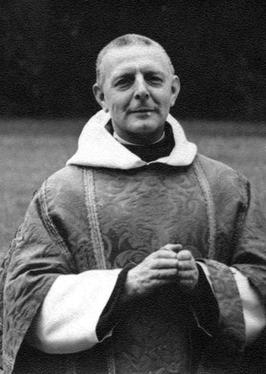 Perhaps the most famous resident of Pershore and Nashdom is the noted liturgist, Dom Gregory Dix, after whom Sarum’s newly endowed Chair in Christian Spirituality is named. Dix’s name and legacy resonate through the liturgical traditions of Anglicanism as one of the most influential and controversial Anglican thinkers of the 20th century who left an indelible mark not just on worship but also on ecumenical liturgical reform.
The man who would later take the religious name Gregory was born as George Eglinton Alston Dix on 4th October (the feast day of St Francis) in 1901 into a family with both Anglo-Catholic and Methodist convictions and whose father and brother were later ordained. Having studied at Westminster College, Dix undertook a degree in Modern History at Merton College, Oxford before studying for 1 year at Wells Theological College (a college which, decades later, would merge with Salisbury Theological College on the site that now houses Sarum College) where he was made a Deacon. After this, he was appointed to a lectureship in Modern History at Keble College in Oxford perhaps with the intention of becoming a College Chaplain. Although his lectureship was short-lived, Dix seems to have a continuing relationship with his alma mater, being made a Doctor of Divinity in 1949.
Dix was ordained priest in 1925 and then entered the Benedictine novitiate at Pershore in 1926, taking the name Gregory after Pope Gregory VII (r. 1073-1085), famous for his part in the so-called Gregorian Reforms and the Investiture Controversy. David Fuller suggests that, of all the Anglican communities Dix could have joined, Pershore provided perhaps the closest similarities to the Roman church and likely followed Benedict’s rule most faithfully. While much of the Benedictine rule may have been important to Dix and, certainly, provided a pattern of liturgy, prayer, and sacrament for Dix, many commentators have noted that substantial amounts of his time and efforts were dedicated to wider concerns outside of community life. For example, he later represented the Oxford diocese at the Convocation of Canterbury and was advisor to the Bishop of Oxford, Kenneth Kirk. Kirk had previously been Regius Professor of Moral and Pastoral Theology at Oxford and called Dix “the most brilliant man in the Church of England.”
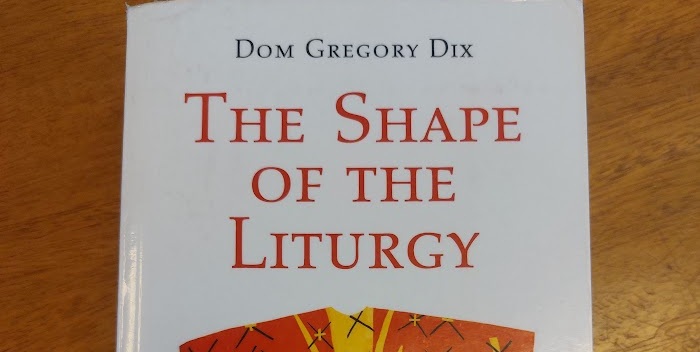
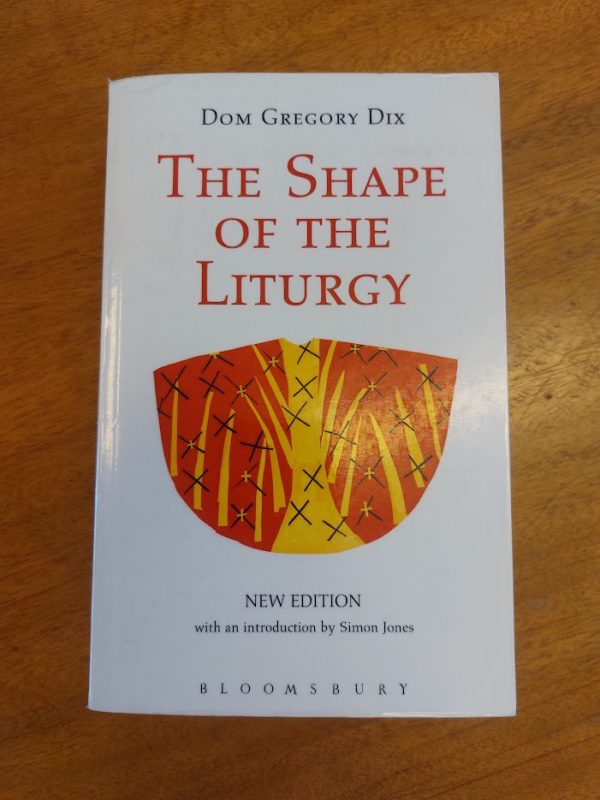
Such a wholeheartedly positive view of Dix was far from unanimous, with both favourable and unfavourable perspectives being based not just on Dix as priest, monk or advisor, but particularly based on Dix’s writing career. Having written several book reviews in the late 1920s, Dix’s many writing projects were published in the 1930s and 1940s. This writing careers covered many topics that can be clearly linked to his monastic and liturgical life, and especially his desire to hold together both the Anglican and Roman influences for his Christian life. For example, he wrote The Question of Anglican Orders in 1944 on the legitimacy of his and other orders and then work on baptism and confirmation such as Confirmation or Laying on of Hands? in 1936 and The Theology of Confirmation in Relation to Baptism in 1946. By far his most famous work is his The Shape of the Liturgy, first published in 1945, to which we shall return.
 Commentators on Dix’s work and legacy have questioned whether he should be considered a scholar or just as a populariser of other people’s ideas. If considered a scholar, many (such as Stephen Neill) have critiqued Dix’s historical and theological methods. Dix – according to such a reading – would frequently suggest several conjectured possibilities before, a few pages later, writing as if one of such possibilities was probable and then, later in the same work, a truthful historical reality.
While many aspects of Dix’s work have been critiqued on such lines, The Shape of the Liturgy ushered in a new era in understandings of the history and theology of the liturgy in the Anglican Church and more widely. Dix famously articulated what he called the “fourfold shape” of the Eucharist: taking, blessing, thanksgiving, and distribution. This structure, he argued, was not merely a liturgical sequence but the sacramental pattern of Christian existence itself. Yet, The Shape of the Liturgy was not a mere devotional text. It combined theology, history, polemic, and spirituality that traced the evolution of Eucharistic celebration from Jewish roots through the early Church to the Reformation and beyond.
His life was cut short by cancer in 1952, at the age of 50, but his influence persisted long after. Dix was not an easy man to categorise – nor is his legacy simple to assess. His methods could be sloppy, his arguments dogmatic or polemical, and his historical claims occasionally unprovable. Yet to dismiss him as merely a populariser does not pay attention to the continued significance of his work. Although his The Shape of the Liturgy might not be the most up-to-date work in the 21st century, it is still to his points that more recent scholars of the liturgy react, showing that he did indeed usher in a new era of our understanding.