

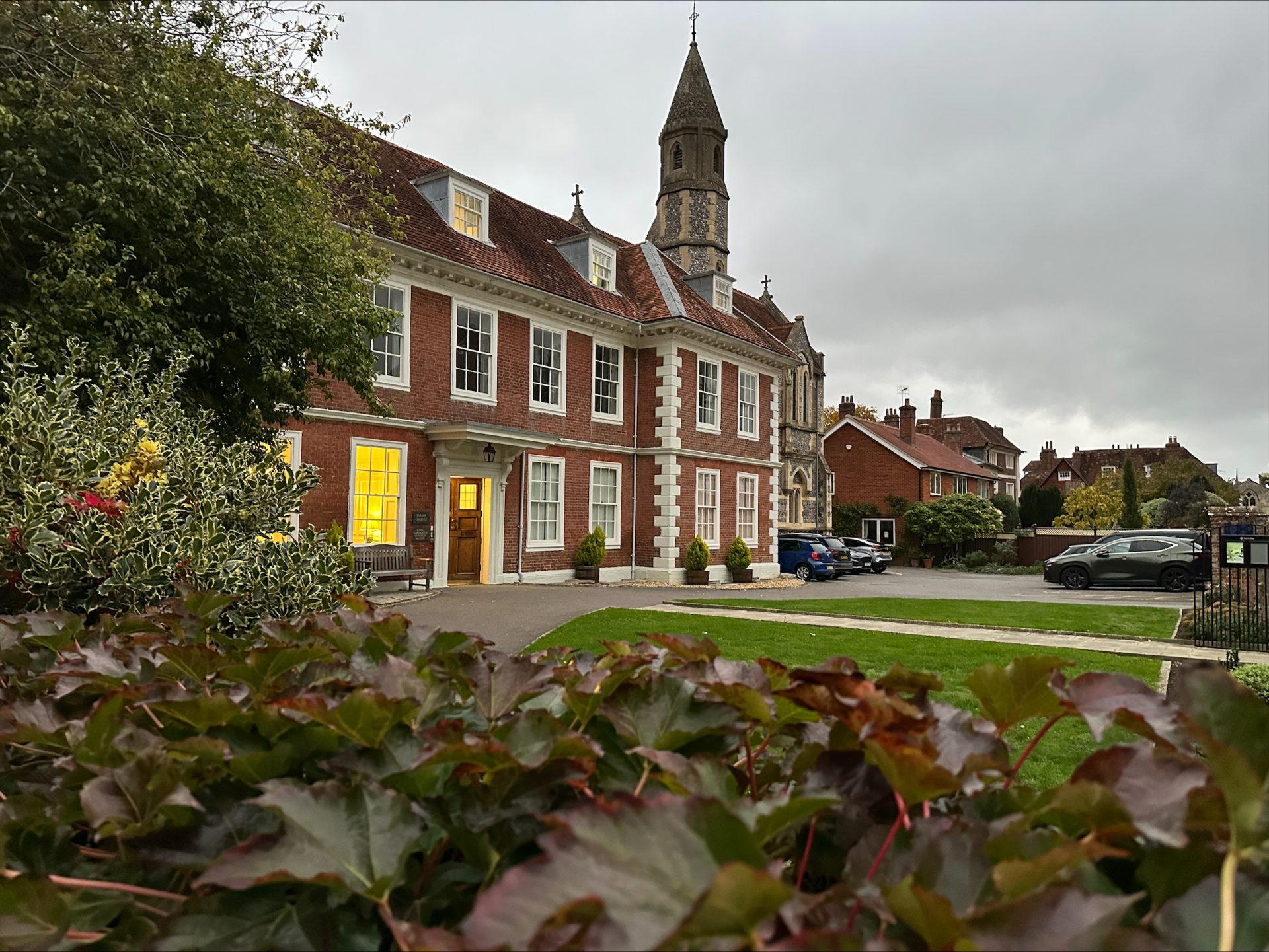
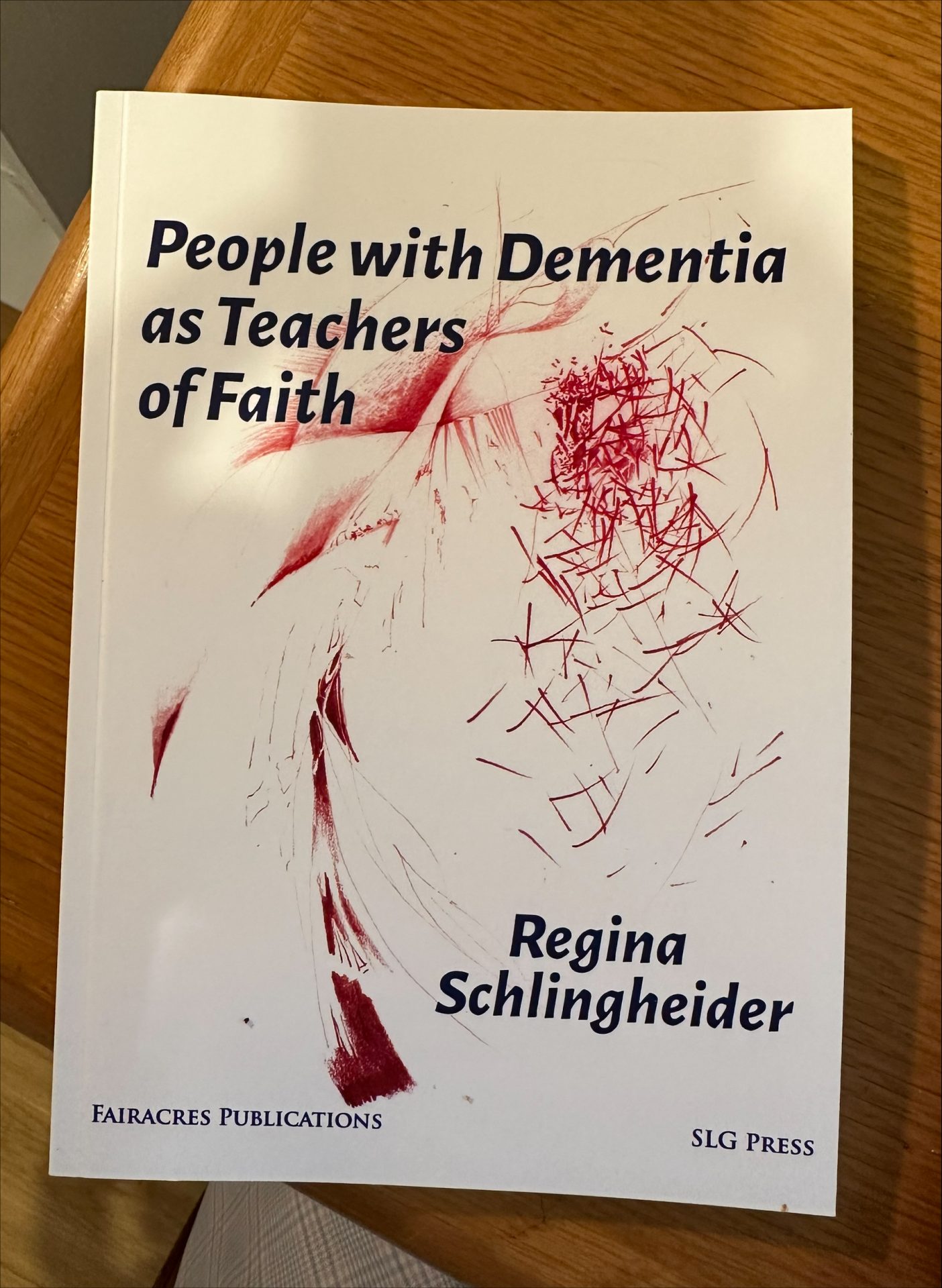
 At the culmination of Sarum College’s MA in Christian Spirituality, students spend their third year writing their dissertations. Many students go on to use their dissertation work to inform their own practice, to lead retreats, as a basis for doctoral study, or develop their work into a publication. We are delighted that Regina Schlingheider, who will graduate from the MA in Christian Spirituality at our awards ceremony in March, has just published an aspect of her dissertation with SLG Press as People with Dementia as Teachers of Faith. She joins a range of scholars including John Chryssavgis, Esther de Waal, Jean Leclercq, Andrew Louth, George Pattison, Benedicta Ward, Rowan Williams, and Sarum College’s Principal and Regina’s own supervisor, James Woodward among their authors.
Like most students on the MA in Christian Spirituality, Regina had been out of formal education for quite some time and did not live near to Salisbury (Regina was one of the furthest away, in Germany). Regina was nervous about studying at first but found support from tutors in her first modules and on specific topics with expert lecturers and tutors particularly helpful:
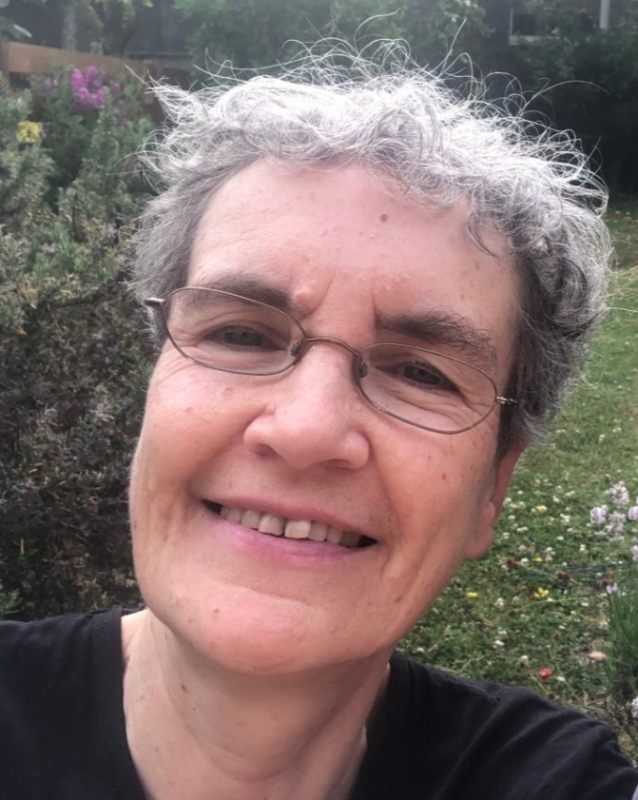 “It wasn’t easy to start studying again after a long break, and I remember my apprehension before the first Zoom meeting of the MACS course. With much support from my tutors and fellow students, however, the course worked well for me. I remember fondly my first essay about the desert fathers and mothers and interesting discussions about the Eucharist. I remember the fun of studying Bonhoeffer from an English perspective and my Guided Reading Module on the beguines with Michael [Hahn] as an expert by my side.”
Students study a series of modules on a range of topics in their first two years and then move on to work on a dissertation with a supervisor who has experience in their field of study. This can be daunting, but the programme teaching team support students through the process of proposing a topic and, as well as tutorials with supervisors, students have access to support days on skills particularly applicable to the dissertation process alongside the rest of their cohort. Regina found this process particularly helpful in developing her work:
“I had never before written something as long as 18,000 words, so I needed all the help I could get for my dissertation year. As I live far away from Salisbury it was an asset that some of our study days were online and that our group of six cheered each other on in a WhatsApp group. There were some dry spells, but James [Woodward] who was my supervisor always made me feel I was doing something worthwhile.”
As with the taught modules, expert tutors and supervisors are brought in, both from the Sarum College faculty and further afield, so that students are supported by experienced researchers in their field. In Regina’s case, her work on dementia and spirituality was supervised by Professor James Woodward who has particular experience in the field of pastoral theology. James commented that:
“One of the great joys and privileges of my work at Sarum College is the supervision of students. Regina was ambitious in her choice of subject areas for her MA dissertation in Christian Spirituality. She attended very carefully to the literature and was able to hold experience, tradition, and critical reflection together in the text of her thesis. I learned a great deal from her as all teachers do from their students.”
Working with a fantastic group of mature students, supervisors and lecturers often comment on the high level of discussion and interaction between students both in the taught modules and in tutorials. This is a particularly rich element of the student experience in the MA in Christian Spirituality.
Students are encouraged to recognise themselves as scholars actively engaged in the conversation of academic research in their field. Many students go on to publish their work or use it in a variety of contexts. Working with James and Michael, Regina was encouraged to submit part of their dissertation to SLG Press in Oxford, a publishing house with a long history of publishing on theology and spirituality and a wide reach. Regina found that this process helped her to further develop her ideas with the specific publication in mind:
“This encouraged me to send part of my dissertation to SLG Press. It was great working with their editor who made helpful suggestions for revision and gave me plenty of time for all the changes that had to be made. I enjoyed those six months when it turned from a dissertation into a small book for readers interested in matters of spirituality.”
This is a significant and accessible contribution for those interested in theological and spiritual responses that take people’s experiences of dementia seriously. James, an expert in this area, comments:
“This SLG publication is well worth reading. It is clear, concise and informative as Regina names much of the suffering and strain of dementia alongside the hope that we see in vulnerable human beings who are able to offer us a different perspective on our faith, the nature of human identity and the preciousness of human limitation and vulnerability. It is an excellent and informative read.”
Regina’s experience shows the progression in confidence that many students have in their writing and researching through the MA in Christian Spirituality and the support on offer to them from a range of tutors.
For more information or to talk about the MA in Christian Spirituality, email Michael Hahn at mhahn@sarum.ac.uk.
Book here for an in-person taster day on Thursday 5th February 2026 HERE
or an online taster evening on Monday 1st June 2026 HERE
Leave a Reply
You must be logged in to post a comment.