

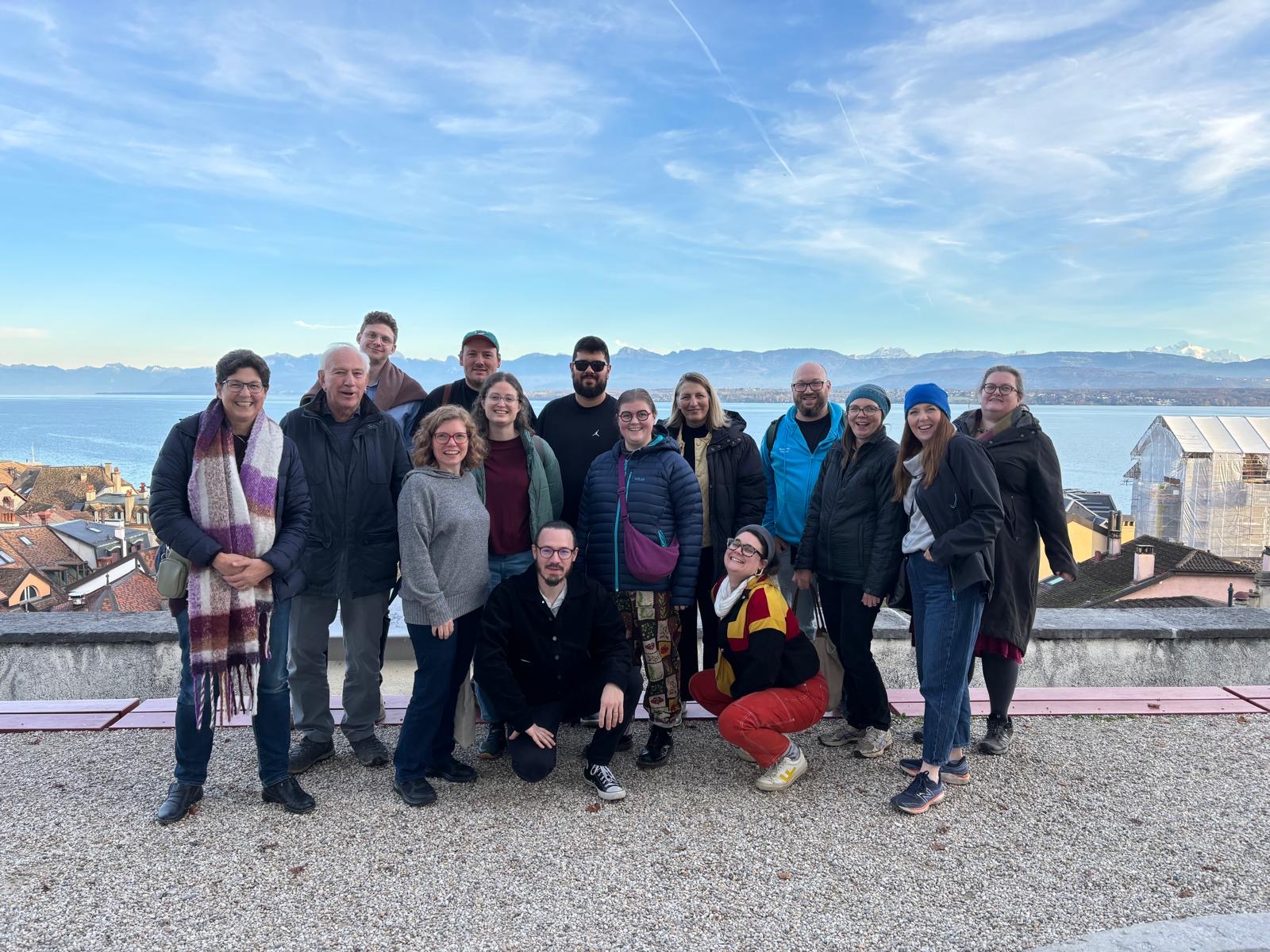
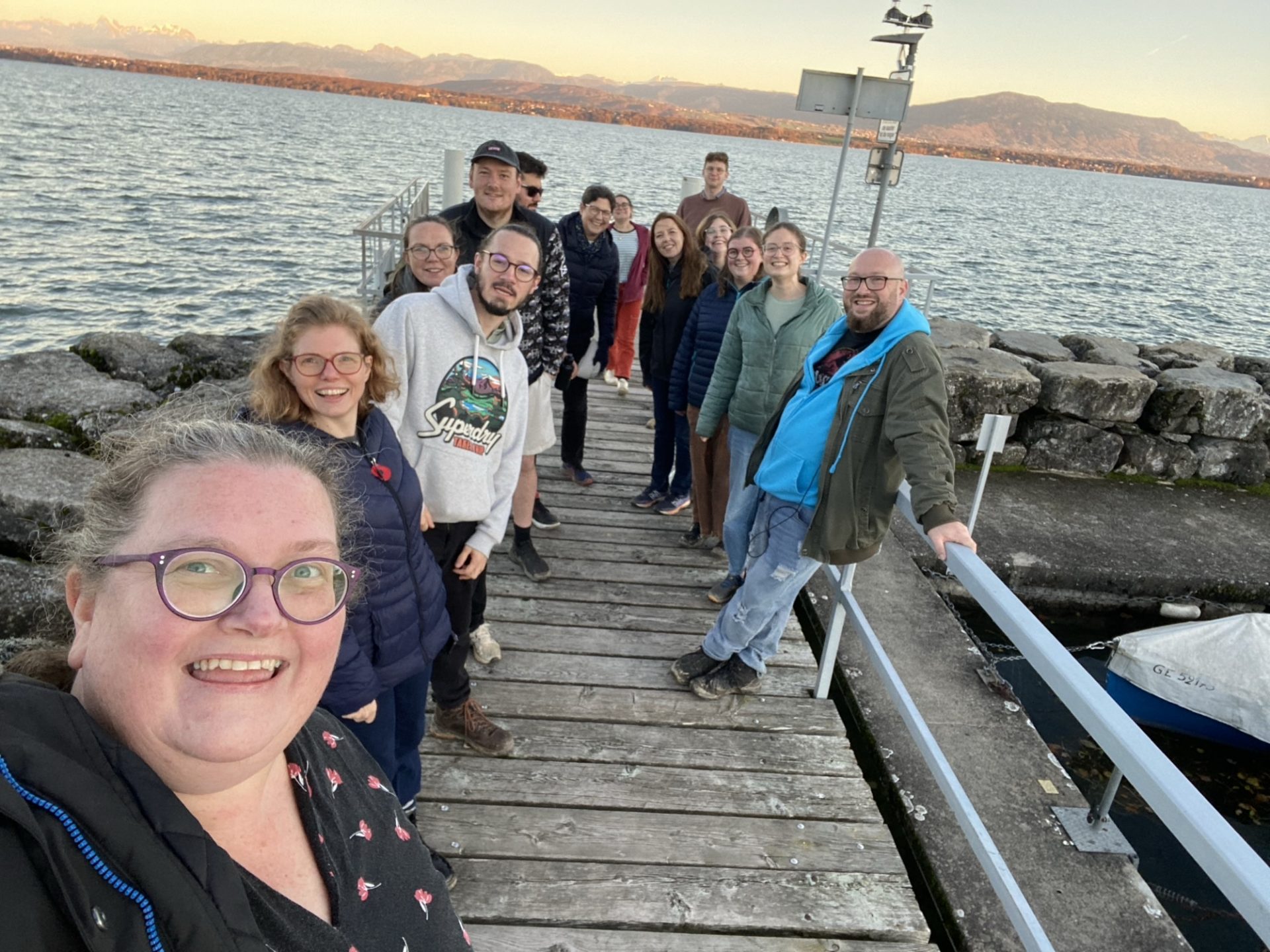
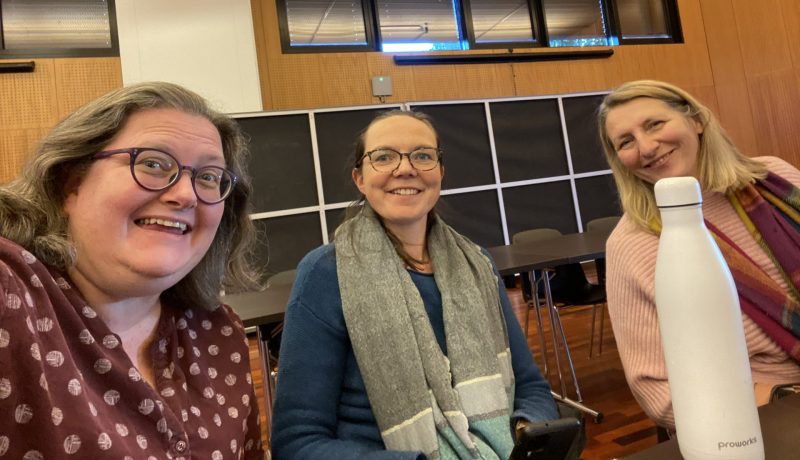
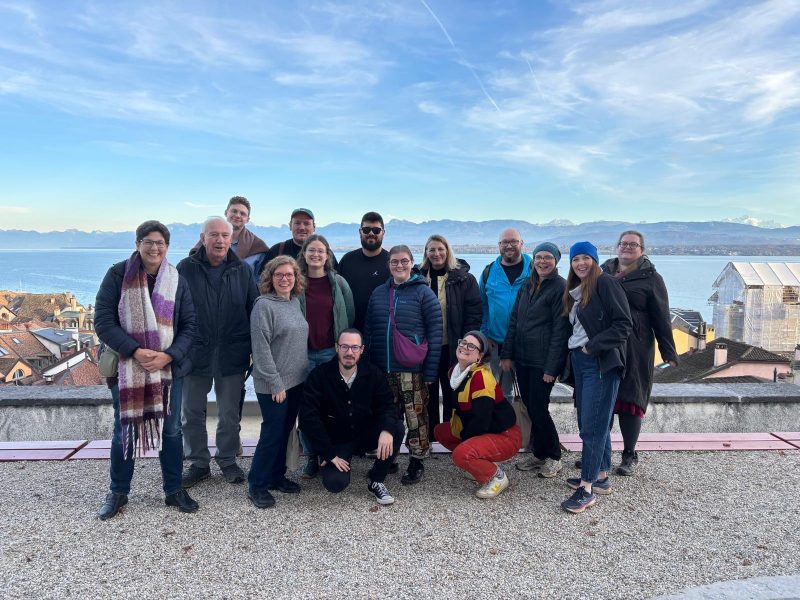
 Sarum College encourages ministry students to take advantage of opportunities available for additional learning, and in October Anne-Marie, Jane and Lynn (pictured here), joined a week for ordinands at the World Council of Churches Ecumenical Institute in Bossey in Switzerland. It was a significant time, and here are some of their reflections, together with photos from Anne-Marie.
Anne-Marie Tuck
It was an incredible privilege to travel to Switzerland and experience a week of study at the Bossey Ecumenical Institute – the Theological College of the World Council of Churches(WCC). We lived and studied alongside representatives from many World Churches who had travelled to Bossey to take part in longer programmes.
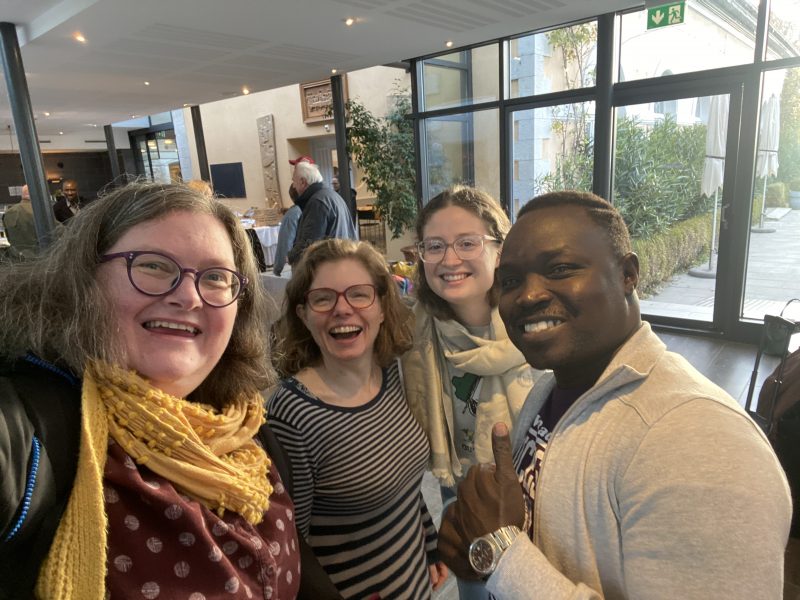 The entire experience highlighted for me the amazing grace and respect required to cultivate unity across traditions. Each morning began with a carefully curated time of prayer that enabled all traditions to worship together. We “did life” and learned with representatives from churches, including the Armenian Orthodox Church, a Baptist from Myanmar, the Church of Sweden, a Methodist from Togo, and Lutherans, among many others.
We attended lectures introducing us to the work of the WCC, focusing on the recent conference to celebrate 1700 years of the Nicene Creed, the WCC’s role in nuclear disarmament and an opportunity to deepen our understanding of the Eastern and Oriental Orthodox traditions. We also audited some of the regular courses, offering us a fascinating insight into global interpretations of the Genealogy of Jesus, the theology of leadership styles and (from us) a session on Anglicanism.
I am still processing and reflecting, but this experience will help me to be more sensitive to Christians from other traditions that I work with. It has also helped me to think more clearly how to engage in ecumenical work in the future. This visit to Bossey will stay with me forever. Thank you for the opportunity.
Lynn Black
My visit to Bossey was a profoundly formative experience. The week offered a personal and spiritual challenge to how I understand ministry, unity, and the life of faith in a global context.
We joined students from over twenty countries and twenty-three church traditions. Each morning’s worship was led by a different tradition. The experience of seeing students leading, wearing their individual liturgical vestments, hearing prayers, worship and Scripture read in a variety of mother tongues was extremely powerful. It illustrated the beauty of Pentecost; many voices, yet one Spirit, proclaiming the same Lord. A reminder that unity is not uniformity, and that the Spirit often speaks most powerfully through difference.
The teaching programme exposed us to a breadth of theological and ethical issues. Sessions on Ecological Reformation, Social Ethics and Leadership, and Interfaith Dialogue further helped me view ministry as something that should be rooted in theology within the realities of the world. Learning about the World Council of Churches’ ongoing work for peace, human rights, and disarmament reinforced that theological conviction and social action sit closely together.
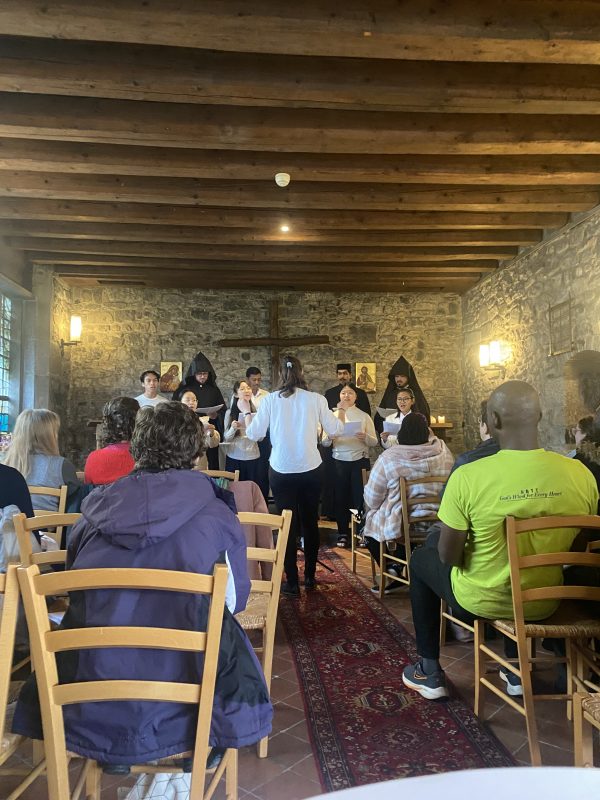 One of the most challenging encounters was the reality that, despite all we shared in the week, we could not share communion together. Standing alongside other Christians, united in prayer yet separated at the table, was a moving experience of separation and hope for restoration. It was a poignant reminder that ministry must hold the tension between affirming our own tradition while remaining open to the work of the Spirit beyond it.
Equally formative were the informal aspects of the week; conversations over meals and shared laughter gave shape to what authentic Christian community can look like. Bossey opened my eyes to the richness of the wider Church and to the importance of engaging beyond our denominational comfort zones. The week also reawakened something of my own European identity – an awareness that my faith is part of a much larger, historically complex Christian story that transcends national boundaries.
Bossey has inspired me to continue studying the history and theology of the ecumenical movement, to tell its story within my context, and to cultivate spaces of honest dialogue and shared prayer. The experience has left me with a vision of unity as shared discipleship in Christ, where difference becomes a place of grace and growth.
Leave a Reply
You must be logged in to post a comment.