- Courses
- Postgraduate Study in Christian Spirituality
- Postgraduate Study in Theology, Ministry and Mission
- Sarum College Course in Spiritual Direction
- Discovering Theology: Starting Out
- Exploring Theology: Going Further
- Short Courses
- Guided Independent Research
- Private Stays, Retreats, Study Breaks and Sabbaticals
- Library
- Sarum Papers & Learning Resources
- Sarum College Bursaries
- Ministry Formation
- Stay, Meet & Eat
- Events Diary
- Join the mailing list


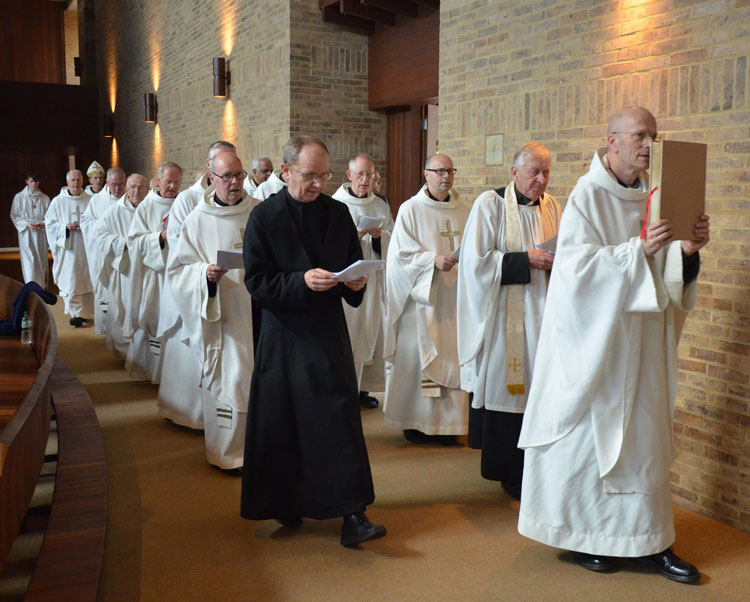
by Michael Hahn
Worth Abbey. Photo courtesy of https://www.worthabbeyparish.co.uk/
In one way or another, the whole of Christian theology and spirituality looks back to the life of a historical figure (the Incarnate Jesus). Many other historical figures have attempted to go back to the life of Christ and his disciples and have, in turn, become models for imitation in their life and the spiritual writings and practices they left behind. One such figure is Benedict of Nursia and particularly his rule. This was used, throughout the Middle Ages and beyond as the most popular monastic rule, being used by communities who would identify themselves as being “Benedictines” and those belonging to other orders or charisms. In a society often considered post-Christian, can such a monastic rule still matter? Many writers have already contended that we can wholeheartedly respond: yes.
Benedict’s rule has been retrieved today in many contexts. In an Anglican context, for example, Rowan Williams wrote The Way of St Benedict and Luigi Gioia wrote The Wisdom of St Benedict: Monastic Spirituality and the Life of the Church, both in 2020. In the US, Rod Dreher wrote the controversial and much-criticised The Benedict Option: A Strategy for Christians in a Post-Christian Nation in 2017 and the rule has also been applied to more specific situations such as in Quentin R. Skrabec Jr.’s St. Benedict’s Rule for Business Success in 2005 who describes the rule as “an organisational blueprint for success … which has widespread application beyond monastic groups.”
Benedict’s rule was a handbook for living well in community in order that the whole community may become more like Christ. Rather than annihilating each person into a faceless part of a community, the rule encourages the individual value of each person in terms of their own qualities. This was lived out in community, built around a life of prayer, work, humility, and stability. In the 21st century, marked by societal polarisation, burnout, and increased hierarchies in societies and in workforces, this medieval pattern of life may provide much we can learn from.
Benedict is famous for his emphasis on ora et labora: prayer and work. These are not just two important things – they are important as a pair. Tradition tells us that when a team sent by the pope came to visit the 13th-century theologian, Bonaventure – a Franciscan, not a Benedictine, but taking much on from the latter form of spirituality – in order to invite him to become a cardinal, he made them wait while he finished the washing up. Bonaventure, one of the great theologians in Christian history lived out Benedict’s idea that no one – however important their prayer life or their academic study – was exempt from physical work in the community. But the reverse is also true. However important one’s work life was – whether copying manuscripts, serving guests, working in the kitchen, or tilling the fields – the monastic day was structured around prayer and community. Today, there is increasing isolation, but also increasing stress, work pressure, and burnout. Benedict reminds us (as individuals, but also as corporations and employers) that time for contemplation, silence, and prayer is just as valuable as time for work. Benedict wanted to encourage people to see themselves as prayerful through conducting their work, and that both had value.
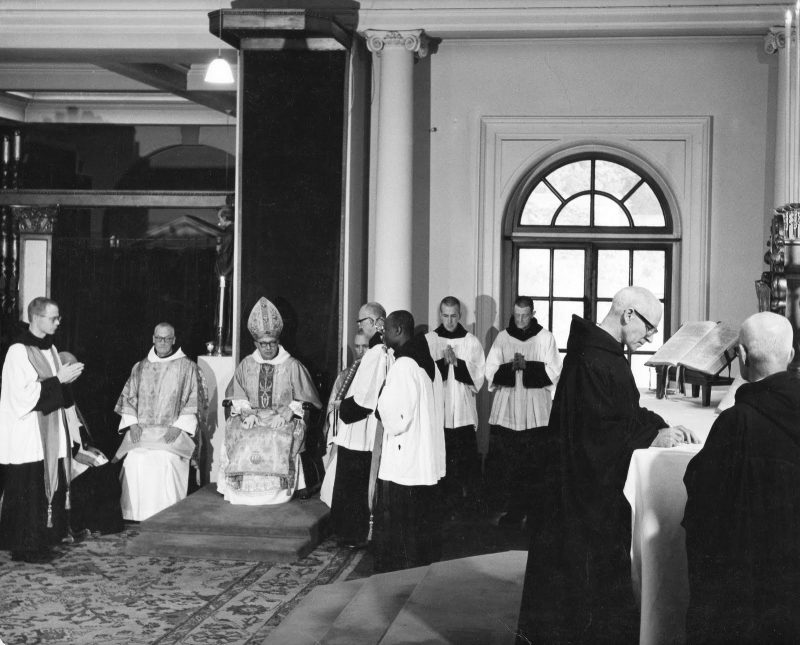
Photo of Nashdom Abbey, courtesy of https://thenashdomchronicles.blogspot.com/
As Rowan Williams points out, the concepts of obedience and humility – so important in Benedict’s rule – often are unattractive today because they reinforce a very domineering sense of hierarchy. Certainly, this is a very reasonable reaction. But the type of obedience and humility that Benedict wanted to instil was not this dominating sense whereby someone had power over others and took advantage of it. Rather, everyone had their specific place in the ecology of the monastic community. The monks should carry out what is asked of them with obedience. But the abbot has a duty of care of the monks and has to be particularly astute for working out the unique value and quality each monk has that can help to serve the community. These unique gifts are not there to bring fame or attention to the self, but rather everyone’s own talents, skills, gifts, and abilities are brought to bear for the good of community in relation to God.
In the later Middle Ages, communities of nuns following the Benedictine rule would pray that the entire community would ascend to heaven together. This is not an inward-looking task but rather is inherently communal. It integrates the vertical aspect of Christian spirituality (i.e. our relationship with God) with the horizontal (i.e. our relationship with those around us). We ourselves are to enter right-relationship with God, but we do that as part of the communal sense of everyone entering into this right-relationship. Someone’s place in a community (whether as a monk or a leader; whether as a follower or a leader) is always to act for the best interests of everyone in that community, not the self. Underlying this is – as Gioia has made clear in his aforementioned book – the idea that the relationship between the Christian and God is that of a child and a father and neither a slave and their owner nor someone attempting to bargain with someone else. This paternal relationship likewise shapes the relationship of the monk with the abbot and therefore the ecology of the monastery.