Themes in Medieval Christian Spirituality (2026) course
How did Christian spirituality come to flourish in the Middle Ages? To what extent can we really access the lives and experiences of people as they practised their faith in that period?
This module looks at a range of expressions and themes that are important in our study of how Christian spirituality was live out, practised, and taught in the period between 500 and 1500. This is a period long celebrated for producing some of the great achievements in the history of Christian spirituality – many of which are still used and practised today. We will also consider how we study Christian spirituality in this period, what kinds of methods we need to employ, and how we access and use the sources that give us insights and glimpses into this period.
Dr Michael Hahn will introduce some of the major developments across the Middle Ages and how this impacted how spirituality was written about, lived out, and practised by tracing some of the major names across this 1000 year period. He will then introduce some of the main scholarly approaches to studying Christian spirituality as well as genres of texts and how we access medieval texts, from manuscript to modern English translations.
Later in the week, Michael will examine what lay Christianity looked like in the Middle Ages and how historians and theologians have attempted to access what this looked like. Michael will also lead sessions on key spiritual practices, such as pilgrimage, and the multifaceted ways the Bible was used in spiritual practices.
Dr Amanda Langley will teach two sessions, examining the Lives (vitae) of saints and medieval rules and customaries (for orders of monks, friars, nuns, beguines, and others). In particular, Amanda will consider how these different sources paint different pictures of key figures and their movements.
Dr Rebecca Field will introduce some of the English mystics before focusing in on the 14th-century classic text, The Cloud of Unknowing. In particular, Rebecca will examine the relationship between spiritual pedagogy and language, consider kataphatic and apophatic linguistic devices and how they may have been used for teaching purposes.
Professor Liz Herbert McAvoy will lead one session on gender and spirituality, considering the feminisation of spirituality in light of such movements as the Cult of the Virgin and affective devotion. Liz will then teach a session on enclosure and particular anchoritic spirituality, considering figures such as Julian of Norwich and the Winchester anchoress as well as the famous guide for anchoresses, the Ancrene Wisse, and how this lifestyle fostered particular expressions of spirituality.
Following on from Michael’s session on the bible and medieval spirituality, Dr Anne Dutton will introduce us to several medieval manuscript of Salisbury Cathedral’s library collection. This includes medieval bibles, bible commentaries and psalters, and editions of texts by figures like Bernard of Clairvaux, Bonaventure and Richard Rolle.
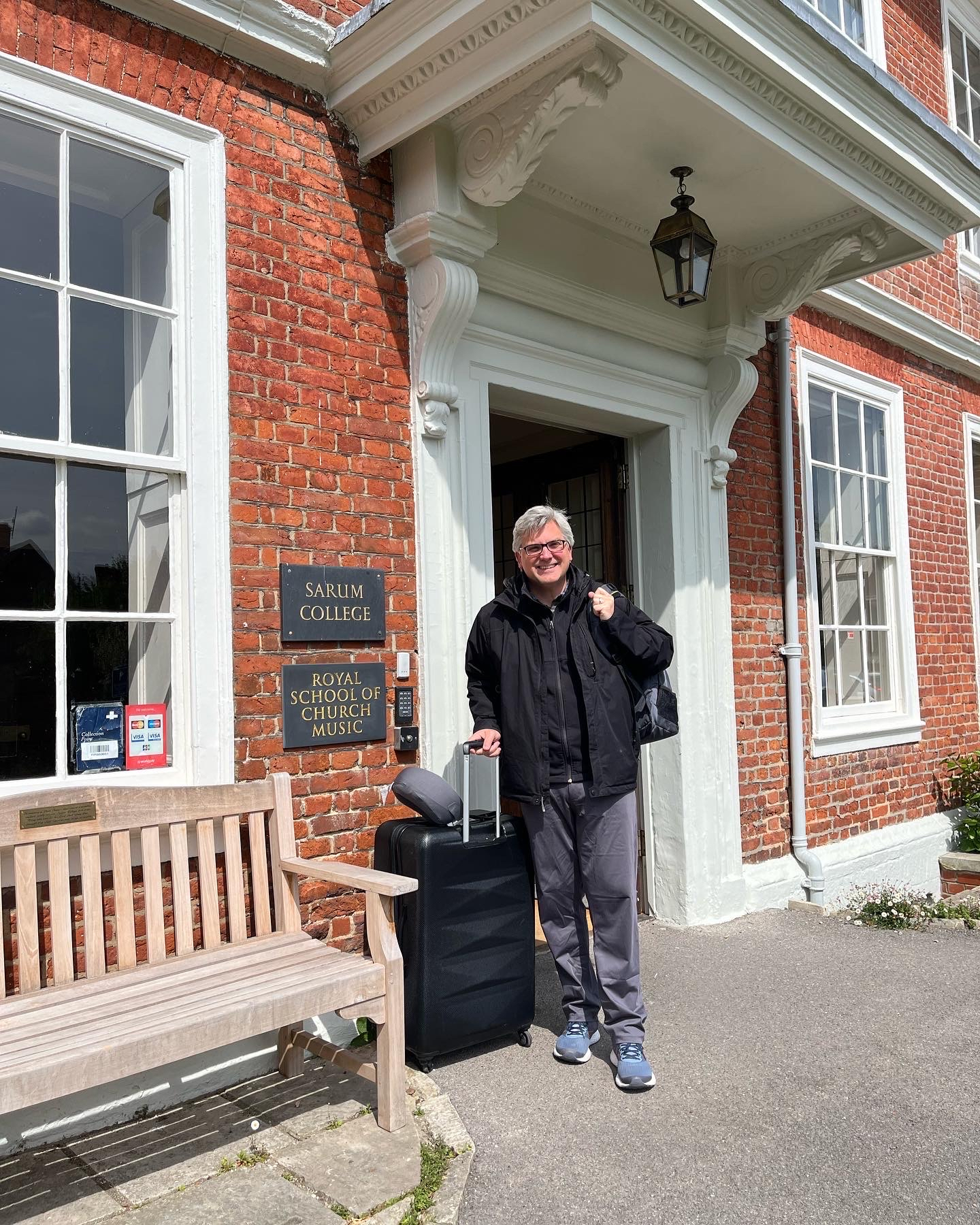
Attendees will also have access to a tour of Salisbury Cathedral and the chance to look at Sarum College’s editions of the Saint John’s Bible.
What does it mean to audit a course?
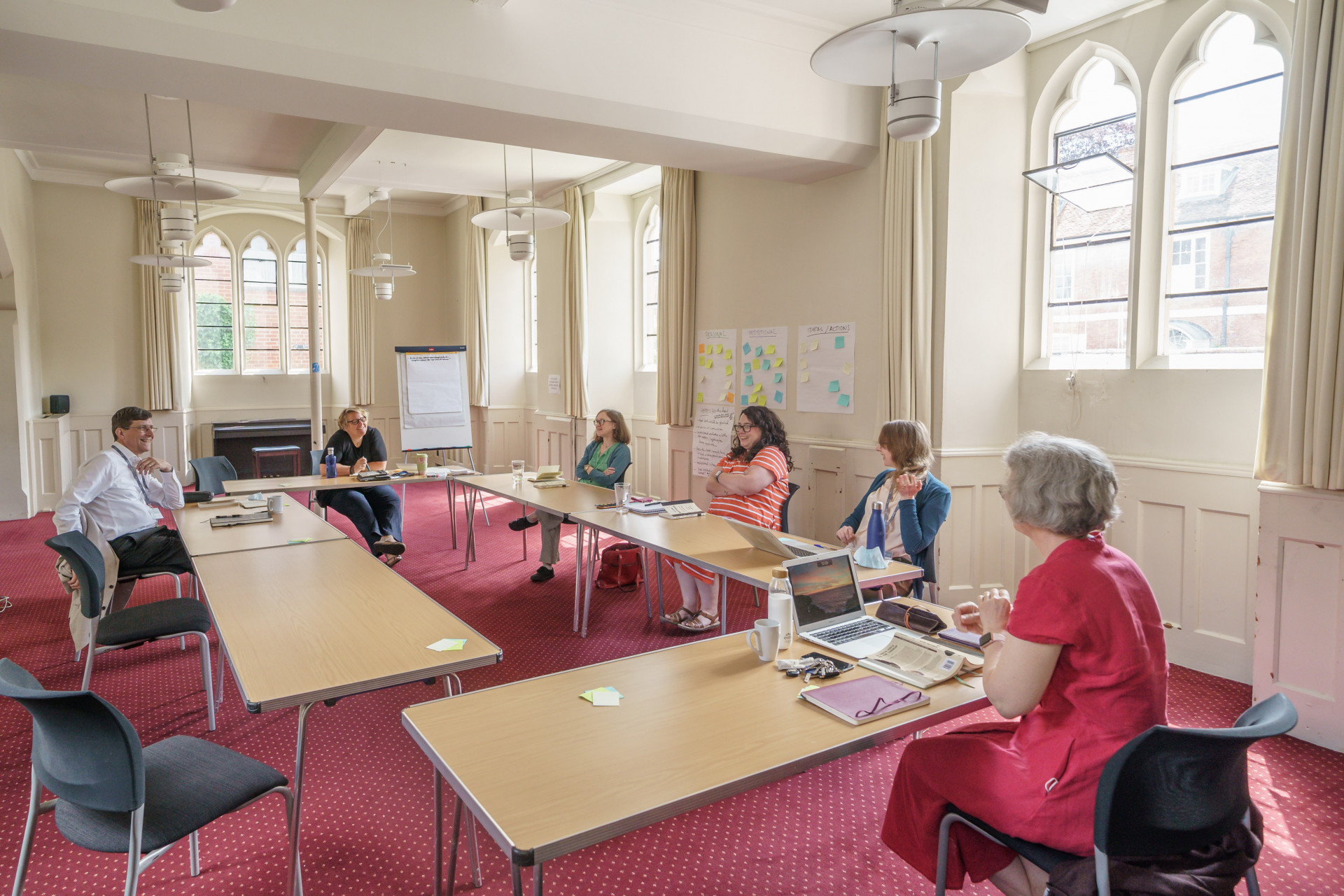
We welcome auditors are participants who learn alongside postgraduate students but are not required to complete an essay or earn academic credit.
This course would made an excellent addition to a study break, retreat or sabbatical in the beautiful Salisbury Cathedral Close, where residential participants enjoy full board, access to the library and to the pattern of liturgy at Salisbury Cathedral.
Whether it’s cultural events, sightseeing (Stonehenge is nearby for example) or shopping — there’s plenty to do if you’d like to extend your stay the weekend before and after the course. For ideas, visit Salisbury Cathedral Close attraction websites to see what’s on Sarum’s doorstep. Visit the Wiltshire Creative website to view events at nearby Salisbury Playhouse and the Salisbury Arts Centre. The Experience Salisbury website has an excellent city-wide listing of forthcoming events around the city.
Need financial assistance? See bursaries that may be available
Learn more about postgraduate study in Christian Spirituality
Enrolled students also may attend teaching weeks for modules in addition to the modules which they are studying for credit, by permission of the Programme Leader. The audit fee and hospitality prices are £160 until 30 June 2026.